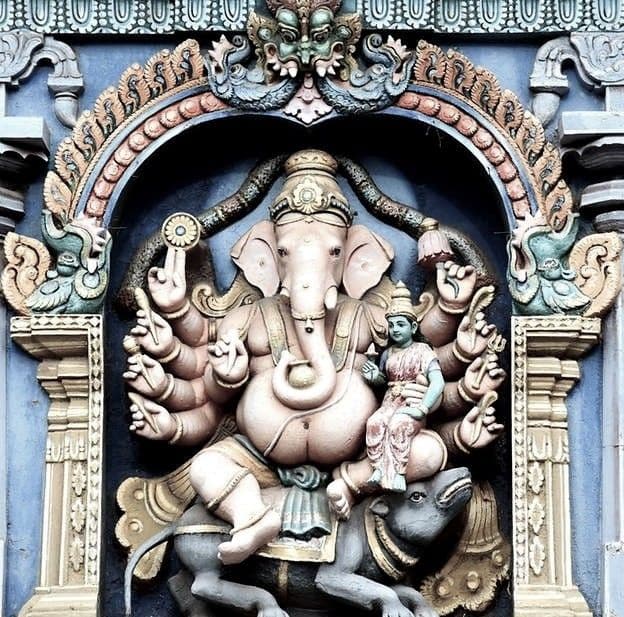
According to a popular legend, it is believed Mumbaraka, a sadistic giant, frequently plundered the city at the time. Terrorized by these unwelcome visits, the locals pleaded with Lord Brahma, the Creator of all things to protect them.
Brahma then "pulled out of his own body", an eight armed goddess who vanquished the Mumbaraka. Brought to his knees, Mumbaraka implored Her Holiness to take his name and built a temple in her honor.
The goddess Mumba was patron of the agri (salt collectors) and kolis (fisher folk), the original inhabitants of the seven islands of Bombay. Goddess Mumba is mother (Aai in Marathi) to the local people and the place was named after Her, Mumba Aai (Mother Mumba) or Mumbai.
The temple of Mumba Devi once stood on the site of the present Victoria Terminus in the central island, which was called Mumbai. The original temple that was built in 1737 was demolished, and a new temple erected in its place at Bhuleshwar, the heart of the steel and clothing markets.
While Hindu sects devoted to the goddess Mumba Devi are attested to as far back as the 15th century, it is said that the temple was built in 1675.
Kṣhetra Purāṇam: Once upon a time, a rākṣhasa by name Mumbarāka lived in this area. He was very cruel and used to terrorize the locals. Not able to tolerate, the locals pleaded Lord Brahma to save them from the rākṣhasa. The Lord then created the eight-armed Mumbādevī from His body to slay the daemon. Mumbādevī then vanquished the rākṣhasa and saved the locality. From then Mumbādevī was worshiped by the locals and is considered as their grāma-devata.