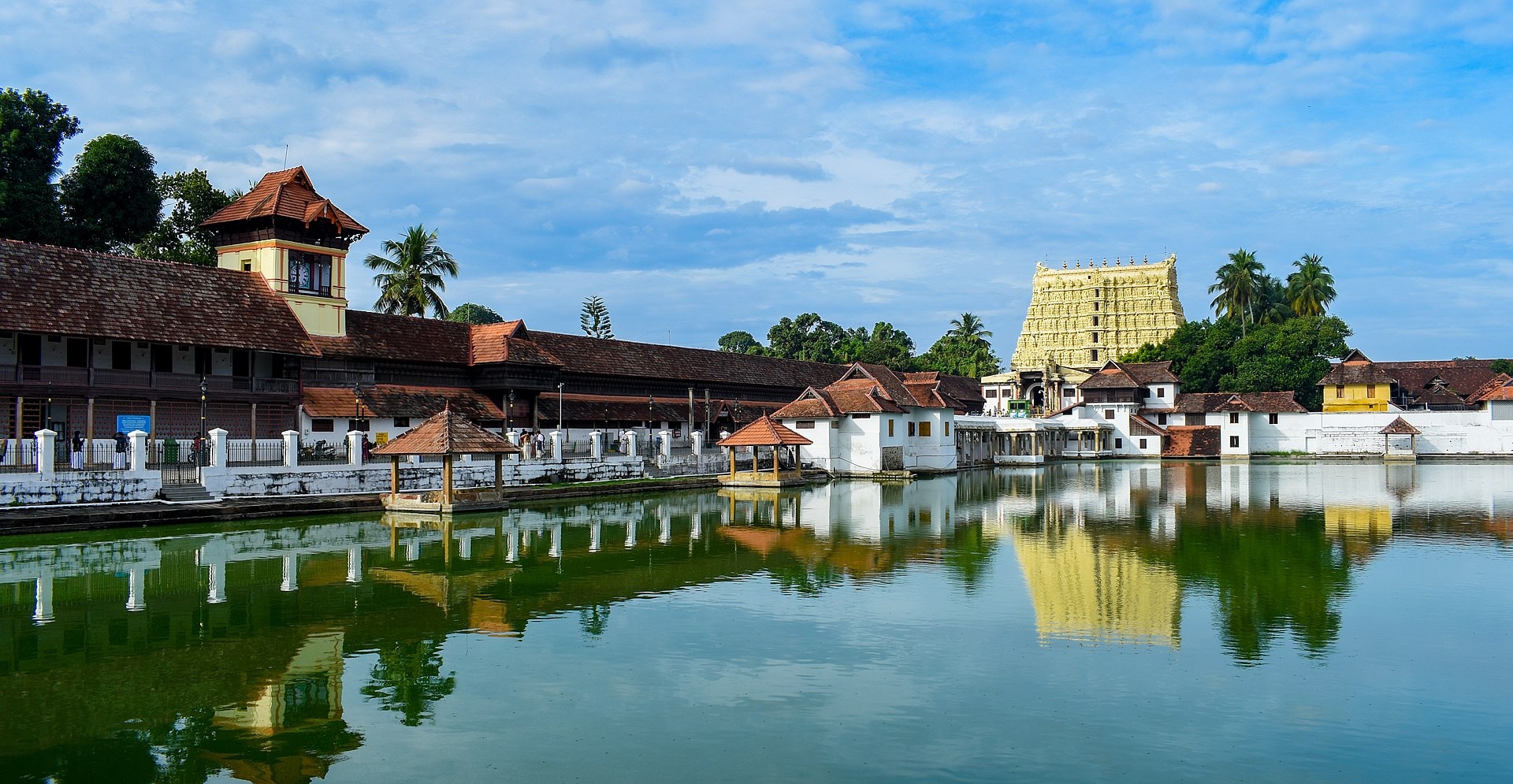
Location:- Thiruvananthapuram, Kerala, India.
Architecture Type:- An intricate fusion of the Chera style (Kerala Architecture) and the Malayala style (Tamil Architecture), featuring high walls, and a 16th-century gopura.
The Temple is regarded as the world’s most valuable site of worship. In Malayalam, the name ‘Thiruvananthapuram’ means “The City of Lord Ananta (Vishnu)”, referring to the deity of the Padmanabhaswamy temple. While the Ananthapura temple in Kumbla, Kasaragod, is regarded as the deity’s original seat (“Moolasthanam”), it is architecturally similar to the Adikesava Perumal temple in Thiruvattar to some extent.
According to locals, one of the names of this temple, “The Golden Temple”, was given in recognition of the fact that the Temple was already unimaginably wealthy at the time. Many existing pieces of Sangam Tamil literature and poetry, as well as later works of Tamil poet-saints like Nammalwar from the 9th century, refer to the temple and city as having pure gold walls. In certain regions, the temple and the entire city are praised as being constructed of gold, with the temple being referred to as heaven.
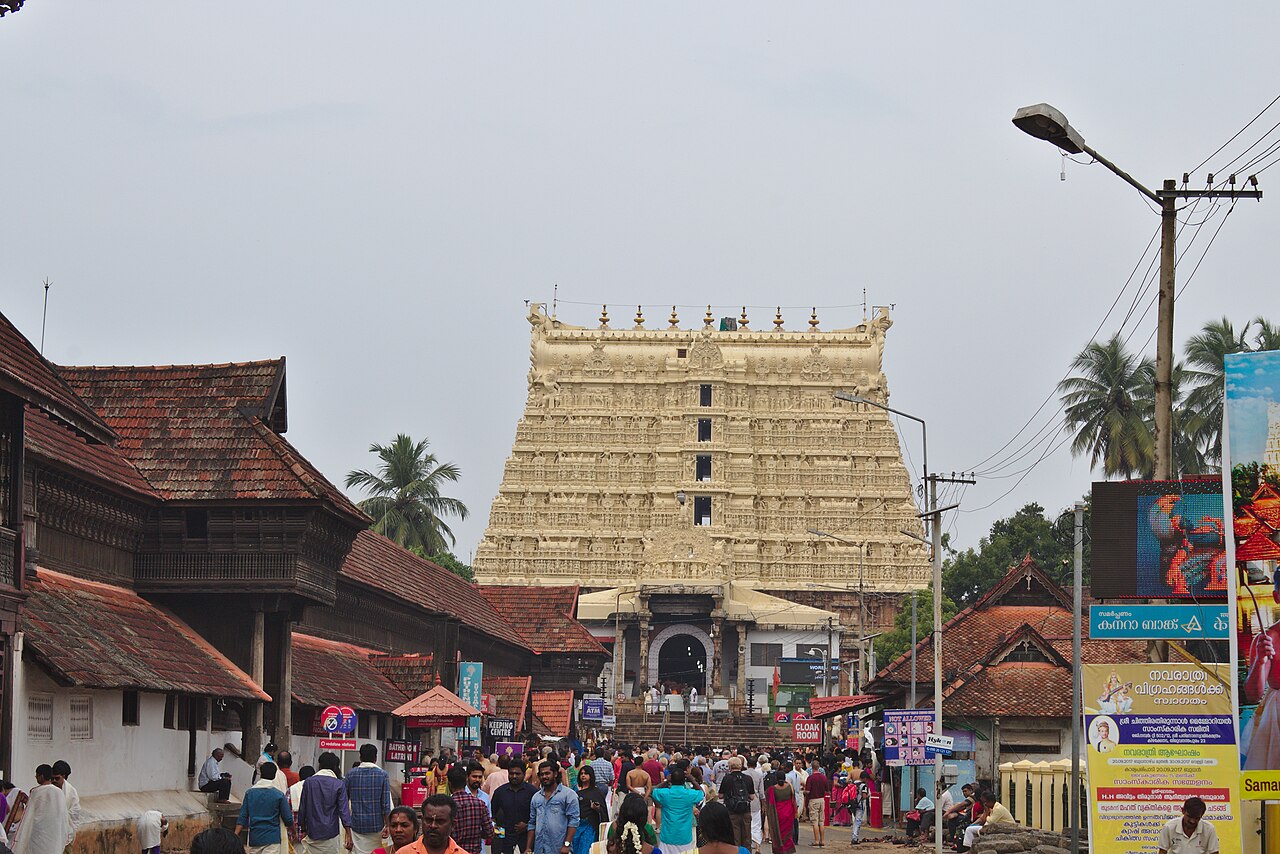
The Temple’s origin tale –
According to Puranas, it is believed that Kasaragod District’s famed sage Vilvamangalathu Swamiyar prayed to Lord Vishnu for his darshan. The Lord appeared in the form of a mischievous little boy and defiled the Puja Idol that had been maintained. The sage became enraged and chased the boy away, who vanished before him. Realizing the boy was no ordinary mortal, the sage wept for forgiveness and sought for another darshan as a sign .”If you want to see me, come to the Anathavana,” a voice said. After a long search, while walking along the banks of the Laccadive Sea, he heard a pulaya lady warning her child that she would dump him in Ananthankadu. The Swami was overjoyed the instant he heard the term Ananthankadu. He followed the directions of the lady he enquired and in quest of the boy, the Sage arrived in Ananthankadu. He noticed the boy merging into an Iluppa tree(Indian Butter Tree). The tree fell down, and Anantha Sayana Moorti was formed (Vishnu reclining on the celestial snake Anantha).
The Lord’s structure, however, was extraordinarily huge, with His head in Thiruvattar in Thuckalay, Tamil Nadu, His body in Thiruvananthapuram, and His lotus-feet in Thrippadapuram near Kulathoor and Technopark (Thrippappur), totaling eight miles in length. The Sage requested the Lord to shrink to a size that was three times the length of his staff. The Lord immediately shrank into the form of the Idol that can now be seen in the Temple. But even then, numerous Iluppa trees blocked the complete view of the Lord. The Lord appeared to the Sage in three different forms: Thirumukham, Thiruvudal, and Thrippadam (Baghawan’s face, body and feet).
Swami begged Padmanabha to pardon him. The Swami presented the Perumal with Rice Kanji and Uppumanga (salted mango chunks) in a coconut shell, which he had obtained from the pulaya woman. Koopakkara Potti and Karuva Potti owned the land where the Sage had darshan of the Lord. A Temple was built with the help of the reigning King and some Brahmin households. To the northwest of the Padmanabhaswamy Temple, the Ananthankadu Nagaraja Temple still stands. To the west of the Padmanabhaswamy Temple is the Swamiyar’s Samadhi (last resting place). Over the Samadhi, a Krishna Temple was constructed. The Vilvamangalam Sri Krishna Swami Temple is located in the Thrissur Naduvil Madhom.
Festivals and rites –
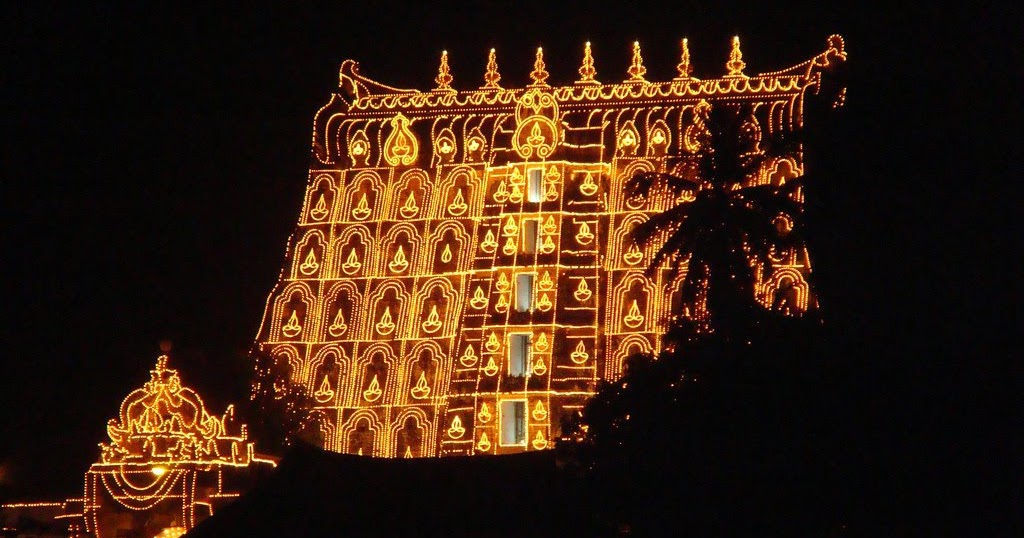
Laksha deepam(one lakh) lamps, is the temple’s most important event. This festival is unique and only happens every six years. For 56 days prior to the event, people chant prayers and recite the three Vedas (Murajapam). Hundreds of thousands of oil lamps are ignited in and around the temple grounds on the last day.
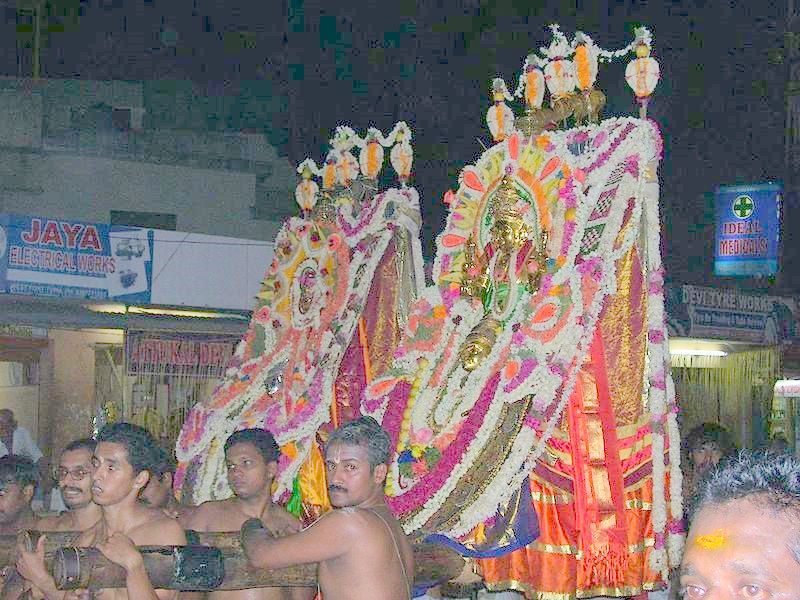
The biggest festivals are held every two years. The Aipasi and Panguni festivals, which take place in the Tamil months of Aipasi (October/November) and Panguni (March/April), run ten days each. The Aarat (holy bath) procession to Shankumugham Beach is the culmination of the festivals. After the customary pujas, the festival idols “Utsava Vigrahas” of Padmanabhaswamy, Narasimha Moorthi, and Krishna Swami are given a ritual bath in the sea for purification. Following this event, the idols are returned to the temple in a procession lit by traditional torches, marking the festival’s end.
The Navaratri festival is also a prominent annual celebration associated with the Padmanabhaswamy temple.